
Why Micro Personalization Tactics are the Secret to Better SEO?
Have you visited a site where it feels almost magical, capturing your attention instantly? Maybe the headline appears to meet your needs very well. Or the product suggestions seemed quite appropriate. You didn’t have to browse through numerous pages. It was like it was designed with you in mind and it was natural and smooth. That’s not magic. That is micro-personalization in action.
On the surface, personalization is straightforward. We have all received emails that address us using our names, as well as advertisements that follow us everywhere on the Internet. But micro-personalization extends. It reacts to what an individual is doing at a given time- what they are browsing, which device they are using, what they have previously visited and uses that to influence their experience in that time and place. It is about leading every visitor on a journey that is personalized.
What adds more twist to the tale is its connection with something larger, i.e., search engine efficiency. Google is not only looking at keywords anymore; it’s actually understanding how users interact with your site. Do they stay? Do they go around it? Do they find value in it? Micro-personalization provides positive feedback by making the experience feel more relevant, which can directly affect how often your site appears in searches, thereby increasing its visibility.
In this blog, we are going to look more closely into what micro-personalization means, how it helps improve SEO, and what steps you can take to adopt it into your own strategy.
1. Why Personalized Web Experiences Matter More Than Ever
Having discussed the actual meaning of micro-personalization, one might wonder why it has become such a big issue in the current world. How has the interaction between people and websites changed? And why does this shift matter to businesses?
It starts with us, the users. We have become accustomed to experiences that seem tailor-made for the moment like a playlist suited to our mood, or personalized product recommendations. We now stretch that expectation to every single website we visit. According to Salesforce, nearly three out of four people are expecting online experiences to be personal, relevant, well-timed, and understood.
This presents a significant challenge. When a person arrives at a site and it doesn’t feel right or is too generic, they tend to move away. This hasty exit sends a strong signal to the search engines that the visitor’s needs were not met. Reduced interaction and visits indicate a failed experience, which can directly impact your search performance.
As per a recent review by the Clerk, 74% of people affirm that they feel frustrated about content when it is not personalized. The frustration does not vanish. Instead, it translates into lost opportunities, lower conversions, and visibility over time.
So, yes, expectations changed. Now people are looking for websites that feel as though they were built around them. Micro-personalization caters to this demand by ensuring that visitors see something that speaks to them the moment they arrive. It’s not about fancy features. It’s about making people feel like they’re in the right place.
Read: 7 Salesforce DevOps Testing Tools for Businesses in the BFSI Sector
2. How Personalization Drives Traffic and Wins Google Over
Having seen how expectations have changed and why a generic experience is no longer effective, the next question is, what does this mean for your traffic and visibility? To be more precise, how does micro-personalization make your site rank better in search?
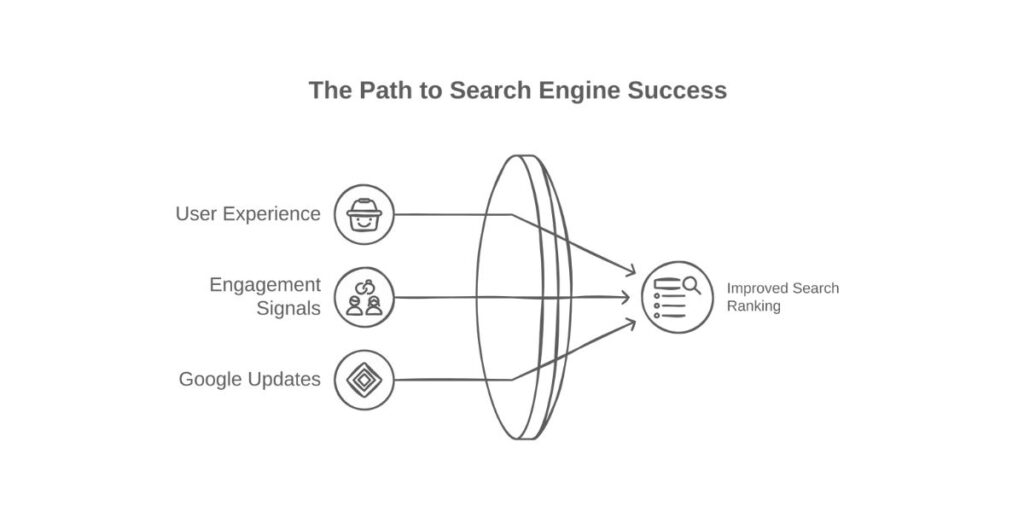
User experience is the primary focus, according to Google.. When a person lands on your website and feels like they are in the right place, they linger more, click around, and explore. This kind of behavior tells Google that your site is working well. It sends signals that the site is relevant, high-quality, and valuable, precisely the things Google wants to reward.
Well, consider this. When a visitor leaves your webpage without any delay because the content doesn’t match their interests, it sends a negative signal to the search engine. But if the visitors find the page suitable for them and stay, that tells Google that your website is worth being seen more. Micro-personalization helps in creating such experiences by presenting the right message to the right person at the right time.
This refers to what marketers term as stronger engagement signals. When content feels relevant, people are more likely to stick around longer, view more pages, and even take action. All of which are considered to give positive signs. They increase your dwell time, decrease bounce rate, and increase the absolute number of pages viewed per single session by any individual. All these metrics weigh on your search ranking in the long run.
Google has always stood up for a good user experience. With updates like RankBrain and the Helpful Content update, the idea is to bring forth content that genuinely helps the user behind the search. Micro-personalization emerged as one of the most effective methods for delivering a helpful experience. Users are assured to visit your site and to find value in it.
3. Actionable Tactics to Multiply Organic Traffic
Now that we have seen the advantages of micro-personalization in terms of experience and search performance, we shall examine how to implement it. The most exciting thing is that you do not have to redesign your entire site. Thoughtful, little changes are capable of making significant changes.
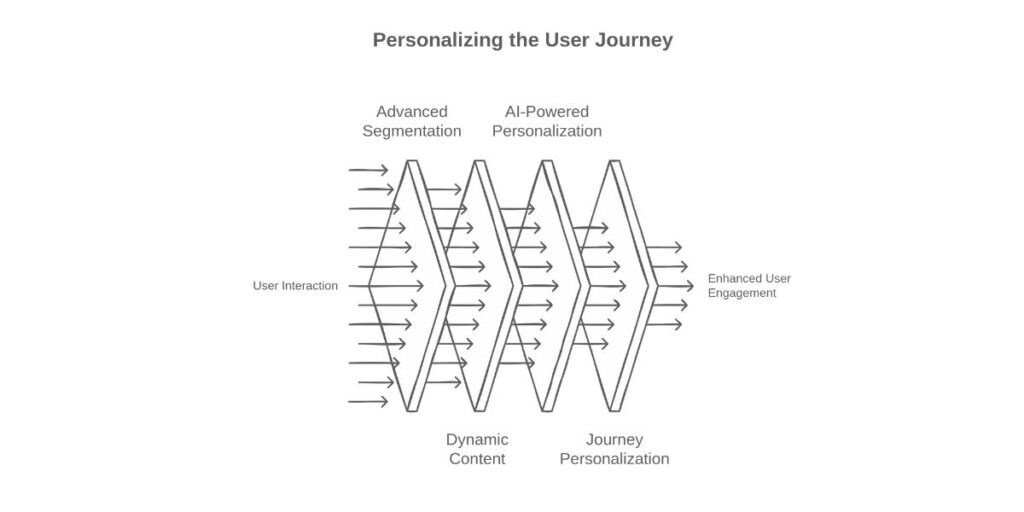
- Advanced Segmentation for Hyper-Relevance:
The first step would be segmentation. Rather than treating every visitor the same, you can segment them based on behavior, their location, or the stage of your sales journey they’re at. For instance, a returning user who has downloaded a guide might want something deeper, such as a demo or case study, while a new visitor may want a clear introduction.
HubSpot effectively employs this technique by customizing its homepage call to action based on who visits; new users are encouraged to get started, while returning customers are invited to log in. It sounds simple, but it removes friction and feels smooth. - Dynamic Content and Real-Time On-Page SEO:
Another big-time tactic is dynamic content. When someone lands on your site from a specific search term, they’re definitely seeking something particular. You can immediately cater to that intention by changing up the headline or hero section to match something they searched for-and bam, the page feels relevant.
Amazon’s use of browsing history is a great example. The home page displays what users have recently viewed, making it look personal and keeping them engaged. In fact, Amazon claims these recommendations account for over 33% of its purchases. - AI-Powered Predictive Personalization:
AI can take things even deeper. With appropriate tools in hand, one could analyze user behavior in real time and predict what someone might want next. This could mean suggesting the perfect article, surfacing a relevant product, or even adjusting visuals to suit the visitor’s interests better.
Amazon’s use of browsing history is a great example. The home page displays what users have recently viewed, making it look personal and keeping them engaged. In fact, Amazon claims these recommendations account for over 33% of its purchases. - Personalizing the Entire Search Journey:
Last but not least, personalization makes sense only when it is throughout the entire search journey. Some visitors will not be prepared to take an action right away, whereas others are still browsing and on the other hand, some are actively comparing. A wise move is to put forth different content at each point of the funnel where a visitor is. For someone who is searching for a definition, they might land on an educational guide, while for someone searching for a product comparison, they might see a chart, pricing and a call to book a demo. When done correctly, you don’t need different landing pages for every intent. You just need one that can adapt.
4. Implementation: Using Web Personalization Platforms
So far, we have seen how micro-personalization enhances user experience, reinforces engagement signals, and improves search ranking. Now comes the big million-dollar question: How exactly are you going to bring it all into the flow of your work without needing to hire an entire army? And that is where a web personalization platform becomes really transformative.
A web personalization platform provides you with the means to do all of what we discussed in this blog, not only to segment your audience but also to adapt your content on the fly. It will guide you out of the guesswork and help you develop experiences that resonate with your visitors. And the most exciting thing about it is that you don’t have to rely on engineering teams or create complicated systems by yourself. These are marketer-oriented platforms.
What is particularly strong about it is the fact that it is directly linked to your SEO objectives. A web personalization platform allows you to decrease bounce rates by displaying more relevant messages. You can extend dwell time by surfacing content that matches the intent of a visitor. And you can send users around further on your site by suggesting what is most useful to them. And these are the same indicators that inform Google that your content is useful.
To illustrate, consider a case where a SaaS company is getting organic traffic of healthcare professionals. By having a web personalization platform, you can present to those visitors a homepage that feels like they already know it, perhaps a healthcare-themed hero image, a headline that appeals to their language, and customer testimonials of others in the same profession. Such types of modifications help your site become more relevant, interesting, and more likely to optimize conversion.
Conclusion
In today’s crowded digital landscape, relevance is what separates top-performing websites from the rest. As search engines continue to reward helpful and engaging content, micro-personalization has become one of the most reliable ways to deliver that relevance. By aligning the user experience with real intent, businesses can not only improve their SEO outcomes but also build stronger, more meaningful connections with every visitor.
To begin with, the best thing would be to be focused. Marketers are recommended to choose a landing page with high traffic and one major audience segment, and execute a simple variation of content to adapt the message to the needs of that audience. Even a test that is as small as that would demonstrate how powerful micro-personalization can be, both in terms of engagement and organic growth in the long run.
Author’s Bio
Vidhatanand is the Founder and CEO of Fragmatic, a web personalization platform for B2B businesses. He specializes in advancing AI-driven personalization and is passionate about creating technologies that help businesses deliver meaningful digital experiences.