
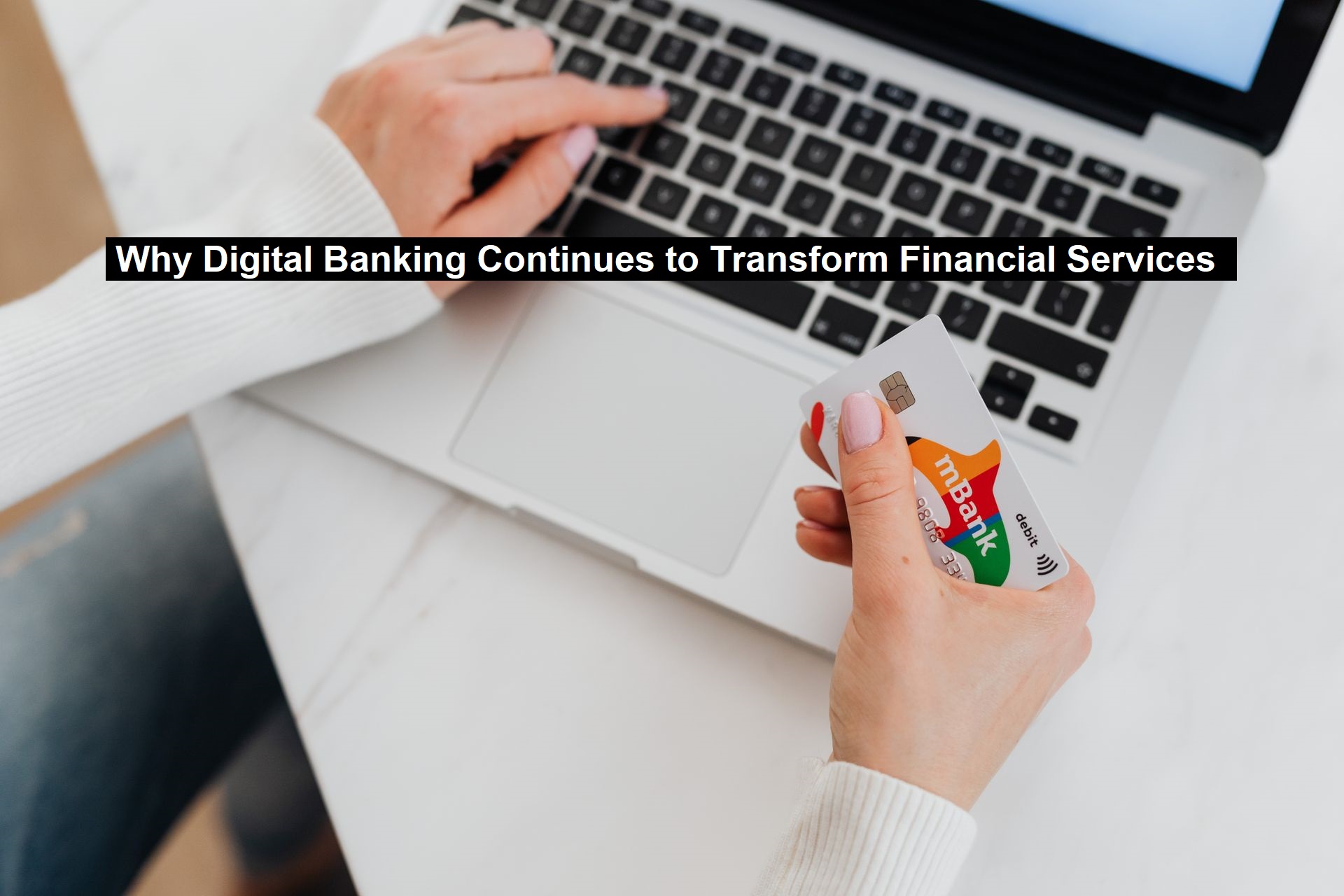
Why Digital Banking Continues to Transform Financial Services
Financial services once depended heavily on physical branches, paper forms, and long waits for relatively simple transactions. Today, a smartphone can provide access to payments, savings tools, credit products, investment accounts, and financial insights within minutes. This shift represents more than a change in where customers manage their money. Digital banking is reshaping how financial institutions operate, compete, develop products, and build lasting relationships with their customers.
The transformation has accelerated as consumers increasingly expect financial services to fit naturally into their daily routines. Banks and financial technology companies have invested in cloud infrastructure, automation, artificial intelligence, cybersecurity, and mobile platforms. Together, these developments are creating a financial environment where convenience is no longer simply an added feature. It is becoming a fundamental part of the customer experience.
Convenience Has Become a Core Financial Expectation
One of the clearest effects of digital banking is the removal of friction from everyday financial tasks. Customers can deposit checks remotely, transfer money, pay bills, monitor transactions, apply for financial products, and receive account notifications without visiting a branch. These capabilities are particularly valuable for people managing busy schedules, living far from traditional bank branches, or simply preferring to handle financial matters independently.
Mobile banking has also changed the relationship between customers and their financial information. Instead of checking an account occasionally, people can see balances and transactions in real time. Automated alerts can highlight unusual activity, upcoming payments, or changes in account balances. This constant access can encourage greater awareness of spending and make it easier to respond quickly when something goes wrong.
For financial institutions, convenience creates pressure to improve the entire customer journey. A slow application process, confusing interface, or unreliable mobile application can encourage customers to consider alternatives. As a result, banks increasingly treat user experience, accessibility, reliability, and speed as strategic priorities rather than secondary technology concerns.
Read: How to Build a Business Around a Single Product Idea
Technology Is Changing How Financial Institutions Compete
Digital banking has lowered some traditional barriers to entering financial markets. Fintech companies can build specialised financial products without operating the same branch networks as conventional banks. Established institutions have responded by expanding digital platforms, partnering with technology providers, and developing their own online services.
This changing competitive landscape has also made financial technology companies increasingly relevant to investors. People researching companies in the sector may examine businesses such as SoFi while considering factors that influence their prospects, including customer growth, product diversification, profitability, regulatory exposure, and broader economic conditions. For investors researching financial technology, information surrounding SoFi stock can form part of a broader examination of how digital financial platforms are positioned within the industry.
Competition is no longer limited to traditional banks and fintech firms. Technology companies, payment platforms, brokerages, and other financial providers increasingly overlap in the services they offer. A customer might use one application for banking, another for investing, and another for payments, while increasingly expecting several of these functions to work together. This convergence is encouraging financial businesses to focus less on individual products and more on complete financial ecosystems.
Artificial Intelligence Is Reshaping Financial Operations
Artificial intelligence is becoming another important component of digital banking. Financial institutions can use automated systems to analyse large volumes of information, identify potentially fraudulent transactions, assist customer-service teams, and streamline repetitive internal processes. These applications can reduce administrative workloads while allowing employees to focus on situations that require human judgment.
AI can also support more personalised financial experiences. Digital platforms may analyse account activity and provide budgeting information, spending summaries, or financial tools based on a customer’s circumstances and activity. When implemented responsibly, these capabilities can make complicated financial information easier to understand and help customers become more engaged with their finances.
Greater automation also creates important responsibilities. Financial institutions must consider data privacy, cybersecurity, transparency, accuracy, and the consequences of automated decisions. Financial regulators and industry organisations have increasingly focused on responsible technology practices because errors involving financial information can have significant consequences. Digital transformation therefore requires more than adopting new technology. It requires effective oversight of how that technology is designed and used.
The Future of Financial Services Will Be More Connected
Digital banking is likely to continue evolving as consumers become increasingly comfortable managing multiple aspects of their financial lives online. Banking, investing, payments, lending, budgeting, and financial education are becoming more connected through digital platforms. This creates opportunities for institutions to provide integrated experiences while giving customers greater visibility into their financial position.
The evolution also means financial institutions must adapt continuously. Customer expectations can change quickly as new technologies become mainstream, while regulatory requirements and cybersecurity threats continue to develop. Organisations that invest in reliable infrastructure, responsible innovation, and accessible customer experiences will need to balance technological progress with the fundamental principles that have always supported financial services.
Conclusion
Digital banking has transformed financial services by changing both how financial institutions operate and what customers expect from them. Tasks that once required a branch visit can now be completed through a mobile device, while technologies such as artificial intelligence and automation are changing how financial products are delivered and managed.
The future of banking will not be defined by technology alone. Security, transparency, privacy, accessibility, and customer trust will remain essential. The most meaningful digital transformation is one that makes financial services easier to access without sacrificing responsibility or reliability.